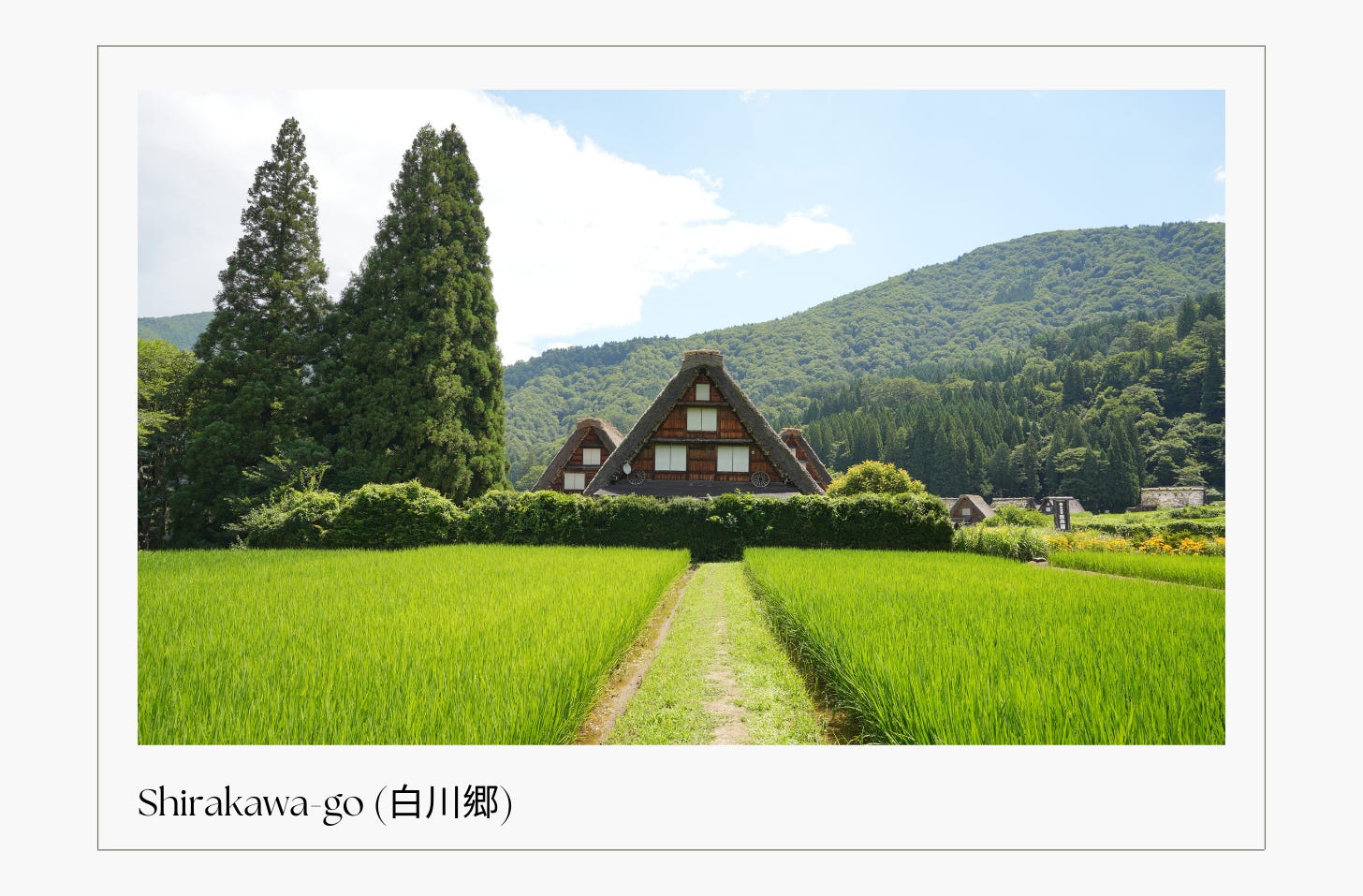
Many have asked me what was my most memorable experience having travelled around Japan for a month in July (I do not recommend spending scorching summers in July), and the visuals that popped up in my head are the beautiful gassho-zukuri houses in Shirakawa-go and Gokayama regions that are said to be over 250 years old.
These gassho-zukuri farmhouses, which were constructed “like hands in prayer”, have been declared as a UNESCO world heritage site in 1995. Located just an hour away from Kanazawa, these farmhouses were redesigned and constructed over the years to withstand large amounts of snow that fall in winter. Interestingly, the roofs were made without nails and delicately covered with pampas grass, with the structure held strongly together by timber.
I visited one of the farmhouses called the Wada House, which has since been designated as a museum due to its large size and importance. During the Edo period, it functioned as a mayoral house and a silk production facility.
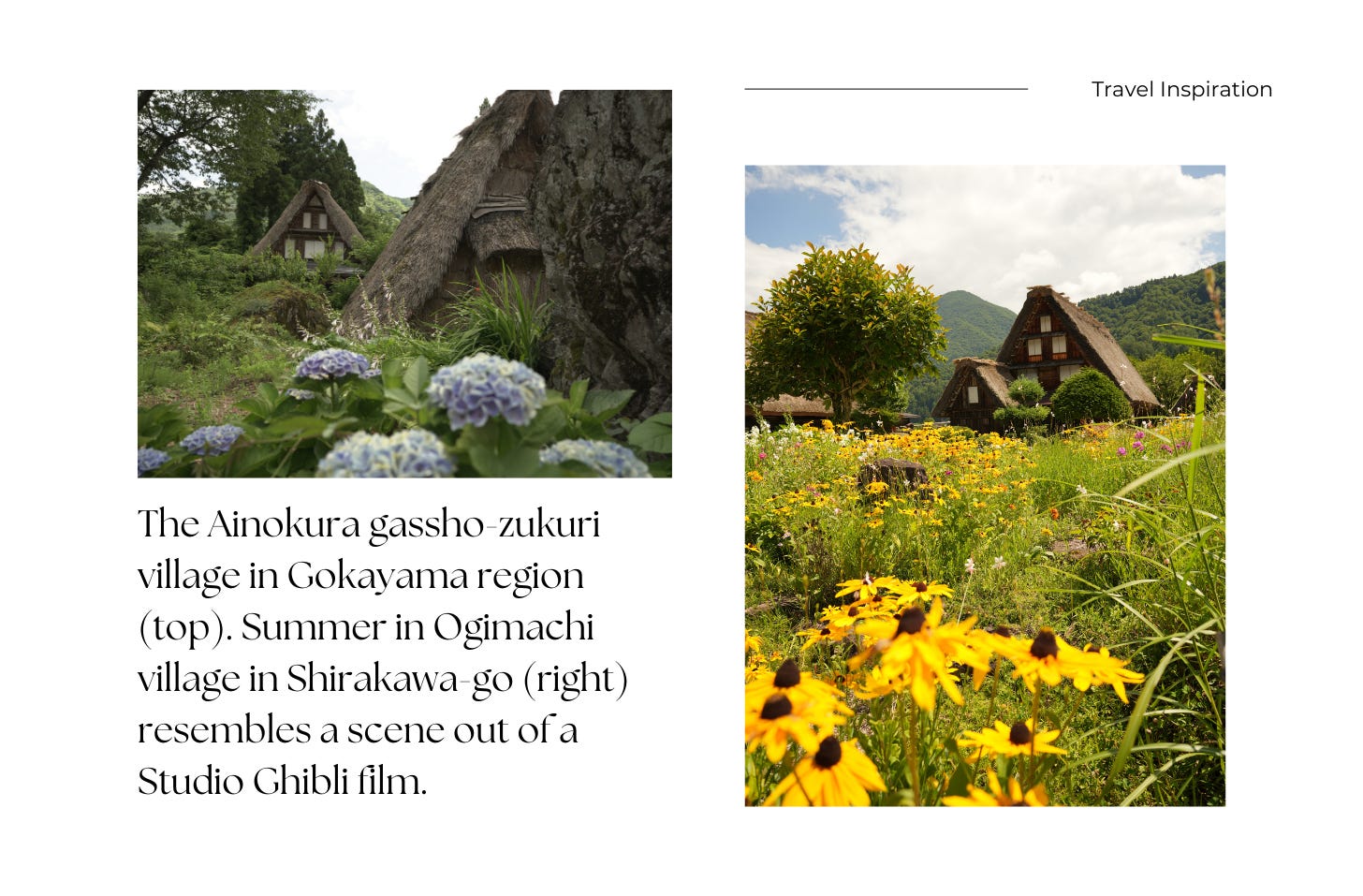
If you have the chance to visit the Ainokura gassho-zukuri village in Gokayama, pop by the washi (traditional Japanese paper) papermaking workshop hall, where you can make your own washi paper with the aid of the teacher. It takes less than 10 minutes!
According to the factual sheet, the manual production of washi was an integral part of the Gokayama villagers’ livelihood. Under the Kaga domain ruled by the Maeda clan, the feudal lords used to order a large production of high quality washi over a hundred households. The main use for washi are for shoji sliding doors, painting and printmaking.